
When you walk into a casino or log into an online gaming site, you might think all tables are the same. Table selection does matter in casino games because choosing the right table can directly affect your odds of winning, the house edge you face, and how much money you keep in your pocket. The difference between a good table and a bad one can mean hundreds or even thousands of dollars over time.
Most players don’t realize that factors like table rules, dealer speed, and minimum bets change from one table to another. These differences impact your bankroll and your chances of success. A blackjack table that pays 3:2 for a natural blackjack gives you better odds than one that pays 6:5, even though both games look similar at first glance.
This guide will show you how to pick the best tables for your skill level and budget. You’ll learn what to look for before you sit down, which rules give you an advantage, and what mistakes cost players money every day. Smart table selection is a basic skill that separates casual players from those who take their gaming seriously.
Understanding Table Selection in Casino Games
Table selection focuses on choosing which specific table to sit at within the same game, while game selection involves picking between different casino games entirely. Many players confuse these two concepts or believe table selection doesn’t impact their results.
Definition of Table Selection
Table selection refers to the process of choosing a specific table among multiple options offering the same game. When you walk into a casino, you’ll often see several blackjack tables, poker tables, or roulette wheels operating simultaneously. Each table may have different minimum and maximum bets, different dealers, and varying numbers of players.
The conditions at each table can differ significantly. A blackjack table might use six decks while another uses eight. A poker table could have aggressive players while another features more conservative opponents. These differences create opportunities to find tables that match your bankroll, skill level, and playing style.
Your choice of table affects factors like game speed, social atmosphere, and house rules. Some tables move quickly with few players, while others progress slowly with full seats. The dealer’s personality and speed can also impact your experience and decision-making time.
Common Myths About Table Selection
Many players believe that “hot” or “cold” tables exist based on recent winning or losing streaks. This myth suggests you should join tables where players are winning and avoid tables where they’re losing. Cards and dice have no memory, so past results don’t influence future outcomes.
Another common misconception is that changing tables can alter your luck. Players often switch seats or move to different tables after losses, thinking a new location will improve their fortune. Your odds remain mathematically identical regardless of which table you choose for games of pure chance like roulette or craps.
Some gamblers think sitting in certain positions gives them an advantage in games like blackjack. While seat position affects the order you receive cards, it doesn’t change the house edge or your long-term results. The exception is poker, where your position relative to the dealer button genuinely matters for strategy.
Table Selection vs. Game Selection
Game selection means choosing between different types of casino games like blackjack, baccarat, or craps. This decision directly impacts the house edge you face. Blackjack typically offers a house edge under 1% with basic strategy, while some slot machines can have edges exceeding 10%.
Table selection operates within your chosen game. After you decide to play blackjack, table selection involves finding the specific blackjack table with the most favorable conditions. You might look for tables with dealer-friendly rules, appropriate bet limits, or fewer decks in play.
Key Differences:
- Game selection determines your baseline odds
- Table selection optimizes conditions within those odds
- Game selection has larger impact on house edge
- Table selection matters more in skill-based games
Game selection typically matters more for your overall results in games of chance. A poorly chosen game can cost you significantly more than picking a suboptimal table within a good game. However, in skill-based games like poker, table selection becomes critical since you’re playing against other players rather than the house.
Why Table Selection Impacts Casino Game Outcomes
The table you choose affects your mathematical edge, how long your bankroll lasts, and the swings you experience during play. These factors work together to determine your results over time.
Influence on Player Edge
Different tables offer different rules that directly change the house edge you face. In blackjack, a table that pays 3:2 for blackjack gives you much better odds than one paying 6:5. That single rule change can add 1.4% to the house edge.
The number of decks in play matters too. A single-deck blackjack game typically offers a house edge around 0.17% with optimal play, while an eight-deck game pushes it closer to 0.65%. You’re giving up nearly half a percent by choosing the wrong table.
Betting limits also affect your ability to use strategy. If the minimum bet is too high for your bankroll, you can’t make the optimal bets your strategy requires. You need at least 50-100 times the minimum bet in your session bankroll to play properly.
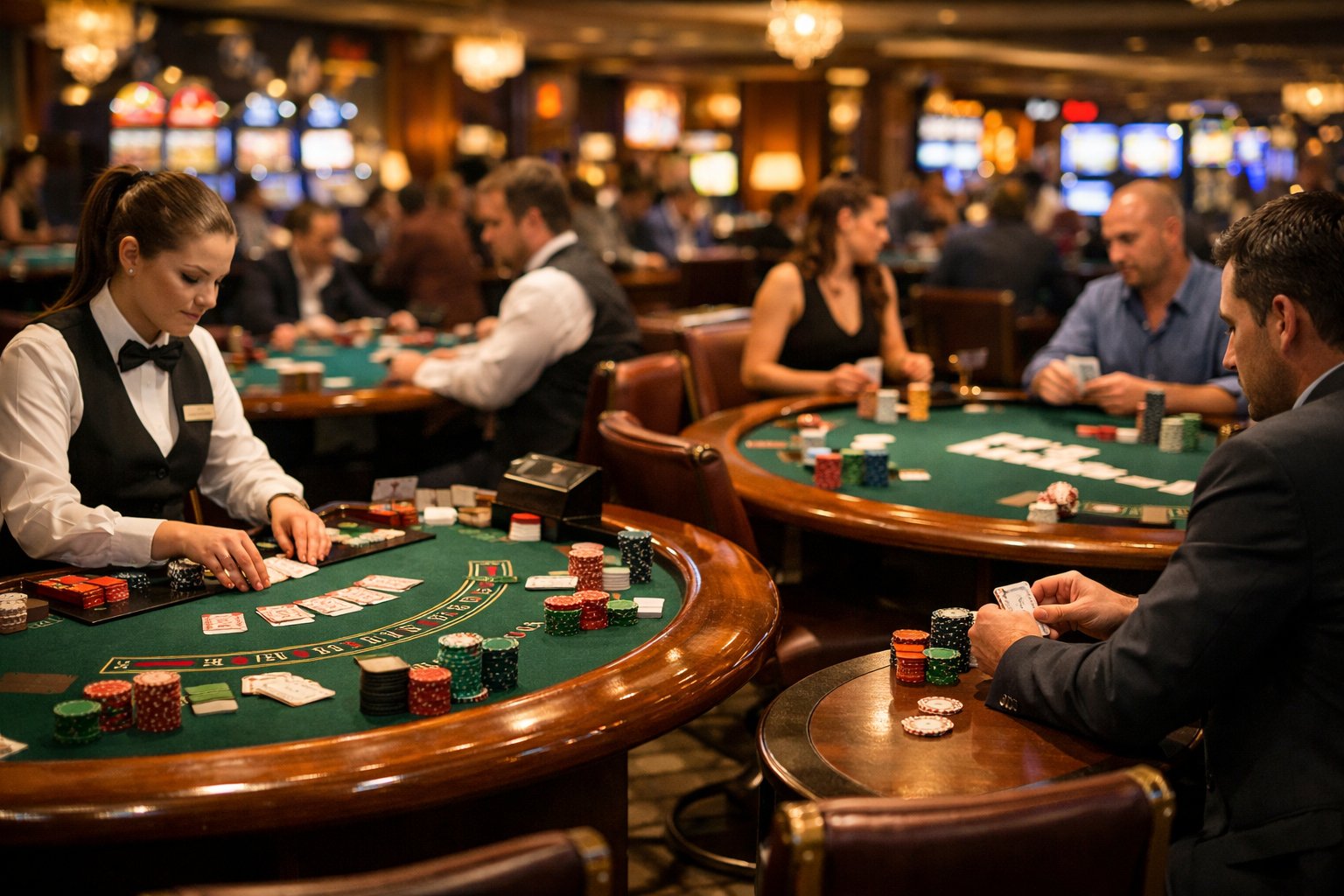
Impact on Game Pace and Session Length
The speed of the game determines how many hands you play per hour, which affects your total risk. A crowded blackjack table might deal 60 hands per hour, while heads-up play can reach 200 hands per hour.
More hands per hour means more exposure to the house edge. If you’re betting $25 per hand at a 0.5% house edge, you risk losing $7.50 per hour at the slow table but $25 per hour at the fast one. Your expected loss triples just from game pace.
Table minimums control how long your bankroll lasts. A $500 bankroll at a $5 table gives you 100 bets, but only 20 bets at a $25 table. The lower minimum extends your playing time and reduces the chance of going broke from normal variance.
Variance and Volatility Factors
The other players at your table create different variance patterns in games like craps or roulette. A busy craps table with many players making prop bets creates a different atmosphere and pace than a quiet table with conservative bettors.
In blackjack, other players’ decisions don’t affect your long-term odds, but they do change short-term variance. More players mean fewer hands per hour and smaller bankroll swings. You’ll experience less volatility over a two-hour session.
The dealer’s style also matters. A fast dealer increases variance by putting more of your money into action. A slow dealer gives you more time to think and reduces the number of decisions you face with your limited bankroll.
Best Practices for Effective Table Selection
Smart table selection involves reading the players around you, understanding how different rule variations affect your returns, and recognizing when table conditions favor your playing style. These factors directly impact your expected outcomes and overall experience.
Identifying Player Skill Levels
You need to pay attention to how other players make decisions and handle their chips. Watch for players who hesitate before every move or ask dealers for advice on basic plays. These behaviors signal less experienced players.
Strong players act quickly and confidently. They know the correct plays without thinking and rarely make fundamental mistakes. At poker tables, skilled players study opponents between hands and adjust their strategies accordingly.
Look for tables where you have a skill advantage. If you’re an intermediate blackjack player, avoid tables filled with card counters or advantage players. If you play poker, seek games where at least three players make obvious errors.
The speed of play matters too. Fast tables with experienced players mean more hands per hour, which increases variance. Slower tables give you more time to think but reduce your hands played.
Evaluating Table Rules and Payouts
Table rules create significant differences in house edge. In blackjack, a game that pays 6:5 for naturals costs you roughly 1.4% compared to traditional 3:2 payouts. That’s a major difference in your expected returns.
Check these specific rule variations before sitting down:
- Blackjack: Dealer hits or stands on soft 17, surrender options, doubling rules
- Roulette: Single zero versus double zero wheels, en prison or la partage rules
- Baccarat: Commission on banker bets, side bet availability
- Craps: Odds multiples allowed, field bet payouts
Minimum and maximum bet limits affect your strategy options. Higher minimums may force you out of your comfortable betting range. Table maximums can prevent you from making necessary bet increases during favorable situations.
Assessing Table Dynamics
The atmosphere at a table affects your decision quality and enjoyment. Drunk or aggressive players create distractions that lead to mistakes. Tables with friendly, focused players help you concentrate.
Dealer speed and personality matter more than most players realize. Fast dealers reduce your thinking time, while chatty dealers slow the game down. Pick dealers whose pace matches your comfort level.
Table crowding impacts your experience differently across games. Crowded blackjack tables mean fewer hands per hour and less heat from casino staff if you’re counting cards. Empty tables give you more hands but more attention from pit bosses.
Time of day changes table composition. Weekend evenings attract recreational players with looser play. Weekday mornings draw serious players and retirees who know the games well.
Table Selection Strategies for Popular Casino Games
Picking the right table in a casino involves different tactics depending on which game you play. Your table choice affects everything from the game’s pace to your actual odds of winning.
Approaches for Poker
In poker, you’re playing against other players, not the house. This makes table selection one of your most important decisions.
Look for tables with weaker players who make obvious mistakes. Watch for people who play too many hands, call bets too often, or show frustration after losing. These players give you better chances to win than sitting with experienced professionals.
Key factors to evaluate:
- Player skill level – Avoid tables where everyone seems highly skilled
- Stack sizes – Choose tables where you can buy in comfortably relative to others
- Playing style – Pick tables that match your strengths (tight vs loose play)
- Game speed – Faster tables mean more hands per hour
Pay attention to table dynamics before you sit down. Spend a few minutes watching how players bet and react. A table with lots of laughing and casual play usually has recreational players. A quiet table with minimal conversation often indicates serious players who know what they’re doing.
Selecting Tables in Blackjack
Blackjack table selection focuses on rules and conditions rather than other players.
The number of decks used directly impacts your odds. Single-deck games give you the best chances, followed by double-deck. Six-deck and eight-deck shoes increase the house edge slightly. Some casinos offer different deck counts at different tables.
Check these rule variations before sitting down:
- Dealer stands or hits on soft 17 (stand is better for you)
- Blackjack payout (3:2 is standard, avoid 6:5)
- Doubling down options
- Surrender availability
Table minimums matter too. Pick a minimum bet that lets you play comfortably for an extended session. Your bankroll should cover at least 40-50 bets at your chosen table minimum.
Choosing Roulette Tables Wisely
Roulette offers fewer strategic choices, but your table selection still matters.
Always choose European roulette over American roulette when possible. European wheels have 37 pockets (single zero), while American wheels have 38 (single and double zero). This difference cuts the house edge nearly in half.
House edge comparison:
| Wheel Type | Zeros | House Edge |
|---|---|---|
| European | 1 | 2.70% |
| American | 2 | 5.26% |
Some casinos offer French roulette with “La Partage” or “En Prison” rules. These rules return half your bet or give you another chance when zero hits on even-money bets. This drops the house edge to just 1.35%.
Table limits should fit your betting strategy. If you use progressive betting systems, you need a table with a high maximum bet relative to the minimum. Standard betting works fine at any limit range that matches your budget.
Common Mistakes to Avoid When Choosing a Table
Players often select tables based on convenience rather than strategy, which costs them money in the long run. Understanding betting limits, reading other players, and recognizing the right environment helps you make smarter decisions at the casino.
Ignoring Table Minimums and Maximums
Table limits directly affect how long you can play and your ability to use betting strategies. Many players sit down without checking if the minimum bet fits their bankroll or if the maximum allows for their preferred betting approach.
A $25 minimum table drains a $200 bankroll quickly, giving you only eight bets before you’re out. You need at least 20-40 times the minimum bet to play comfortably and handle losing streaks. If you have $500, a $5 or $10 table gives you much more staying power.
Maximum bets matter too. Some betting systems require you to increase your wager after losses. A table with a $500 maximum stops you from doubling up beyond a certain point, which breaks these strategies.
Check the posted limits before you sit down. Walk around and compare different tables to find one that matches your budget and playing style.
Overlooking Opponent Behavior
In games like poker where you play against other people, the skill level and playing style of your opponents directly impacts your profit potential. Choosing a table full of experienced, tight players makes winning much harder than finding recreational players who make frequent mistakes.
Look for tables where players seem relaxed and are there for entertainment. These players often call too many hands, chase unlikely draws, and miss strategic opportunities you can exploit.
Warning signs of tough tables:
- Players who rarely enter pots
- Quick, confident decisions
- Minimal conversation or distraction
- Professional-looking chip stacks
In games like blackjack or roulette where you play against the house, other players still affect your experience. Slow decision-makers frustrate you and reduce hands per hour. Drunk or rowdy players create distractions that lead to your own mistakes.
Misjudging Table Atmosphere
The mood and pace at a table affects your concentration and decision-making ability. A chaotic, loud table might seem fun but causes errors when you can’t think clearly. A silent, tense table creates pressure that pushes you to play differently than you normally would.
Dealers set much of the table’s tone. A friendly, competent dealer keeps the game moving smoothly and explains rules when needed. A rushed or unfriendly dealer adds stress and makes the experience unpleasant.
Watch a table for a few minutes before joining. Notice if players are friendly or hostile, if the dealer seems competent, and if the pace matches your comfort level. A cramped table with aggressive players betting large amounts creates a different environment than a spacious table with casual conversation.
Your emotional state matters as much as the table atmosphere. If you feel uncomfortable or pressured at a table, your play suffers regardless of the technical advantages.