
Every time you place a bet at a casino, the game is designed to give the house a mathematical advantage over you. This advantage is called the house edge, and it ensures casinos make money over time even when individual players win. Understanding how this works can help you make smarter choices about which games to play and how to manage your money.
The house edge is a percentage that represents how much of each bet the casino expects to keep as profit over the long run. For example, if a game has a 2% house edge, the casino will keep about $2 for every $100 wagered over thousands of bets. Different games have different house edges, ranging from less than 1% in some blackjack variations to 10% or more in certain slot machines.
You can’t eliminate the house edge, but you can choose games where it’s lower and use proper strategy to keep it as small as possible. This article will explain how the house edge works across popular casino games and what factors affect your actual odds of winning.
Understanding House Edge
The house edge represents the mathematical advantage casinos have over players in every game. This built-in percentage determines how much money the casino expects to keep from all bets over time.
Definition of House Edge
House edge is the percentage of each bet that the casino expects to keep as profit in the long run. When you place bets at a casino, the game rules are designed so the casino wins more often than you do.
For example, if a game has a 2% house edge, the casino expects to keep $2 from every $100 wagered over time. This doesn’t mean you’ll lose exactly $2 for every $100 you bet in a single session. The house edge plays out over thousands or millions of bets.
Different games have different house edges. Some games give the casino a small advantage of around 1%, while others can reach 5% or higher. The house edge ensures casinos remain profitable even when individual players win big.
How House Edge Is Calculated
Casinos calculate house edge using probability and game rules. The calculation compares the true odds of winning against the payout odds the casino offers.
You can find house edge by looking at all possible outcomes in a game. Each outcome has a probability of happening. The casino sets payouts that are slightly lower than the true odds would justify.
In roulette, a single number bet on an American wheel pays 35 to 1. However, there are 38 numbers on the wheel, making the true odds 37 to 1. This gap between the payout and true odds creates the house edge of 5.26%.
The formula involves multiplying each outcome’s probability by its payout, then comparing that to what you risked. The difference is the house edge percentage.
Impact of House Edge on Players
Your expected losses over time directly relate to the house edge. Games with lower house edges give you better odds of keeping your money longer.
A 1% house edge means you’ll lose money more slowly than a game with a 5% edge. If you bet $1,000 total on a 1% house edge game, you can expect to lose around $10. The same amount on a 5% game would cost you about $50.
Short-term results vary greatly from the house edge. You might win or lose much more than the edge suggests in any single session. The house edge becomes more accurate over longer periods and more bets.
Choosing games with lower house edges improves your chances of walking away with winnings. Your bankroll lasts longer, and you get more playing time for your money.
House Edge in Table Games
Table games offer some of the lowest house edges in casinos, with percentages ranging from around 0.5% in blackjack to 5.26% in American roulette. The specific advantage varies based on game rules and the version you play.
House Edge in Blackjack
Blackjack typically has a house edge between 0.5% and 2% when you use basic strategy. This makes it one of the best games for players in terms of odds.
The exact house edge depends on the specific rules at your table. If the dealer stands on soft 17, the house edge drops slightly in your favor. When the dealer hits on soft 17, it increases the casino’s advantage.
Payout structure matters significantly. Traditional blackjack pays 3:2 for a natural blackjack, but some tables only pay 6:5. This single change raises the house edge by about 1.4 percentage points.
The number of decks in play also affects your odds. Single-deck games usually offer the lowest house edge, while eight-deck shoes increase it. Your decisions at the table directly impact these numbers, which is why following basic strategy is important for keeping the house edge as low as possible.
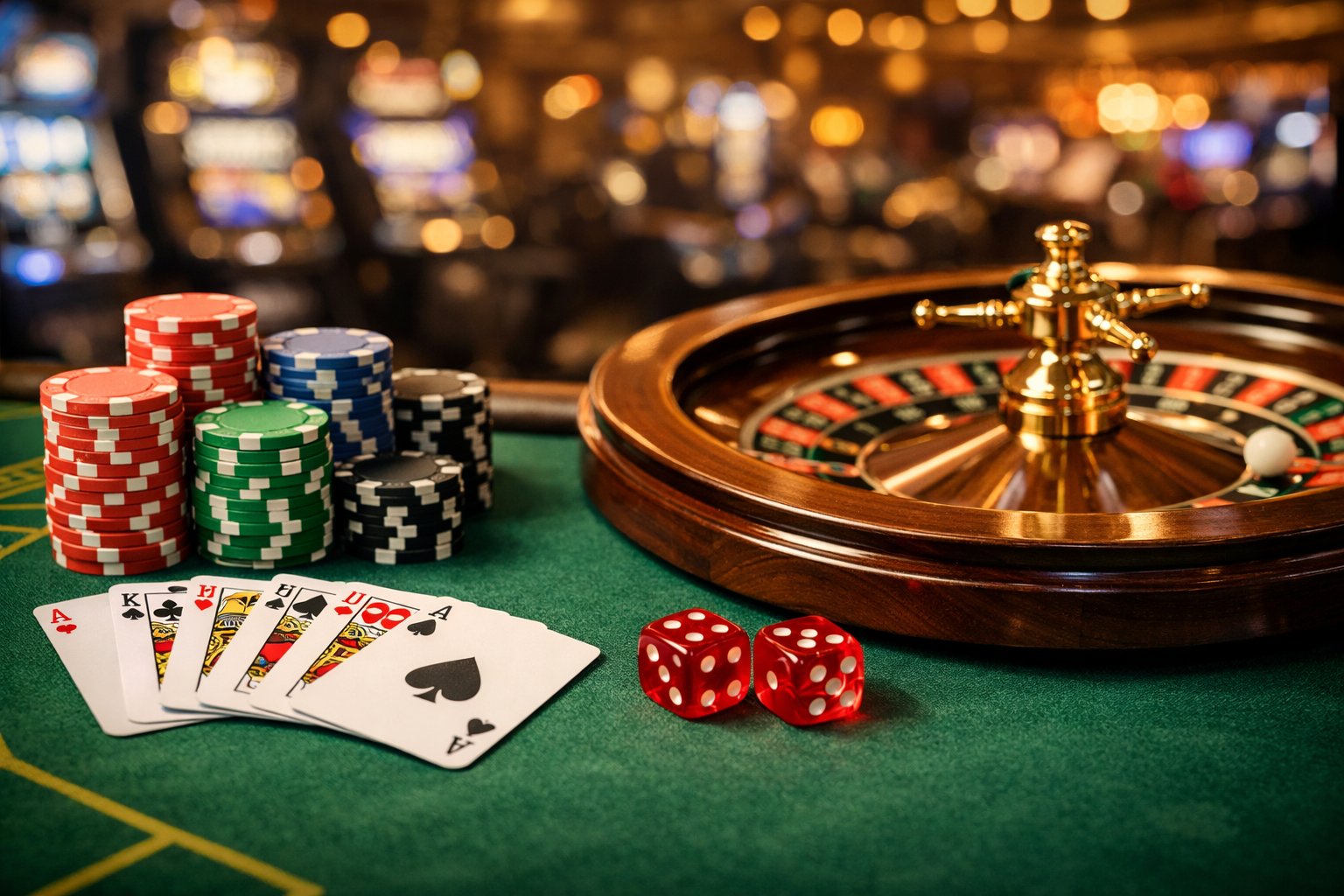
House Edge in Roulette
Roulette’s house edge depends entirely on which version you play. American roulette has a house edge of 5.26% because the wheel contains both a 0 and 00. European roulette drops to 2.70% with only a single 0.
The math is straightforward. In American roulette, you have 38 total slots but only get paid as if there were 36. European roulette has 37 slots with the same payout structure, giving the casino a smaller advantage.
Some European tables offer additional rules that lower the house edge even further. The “en prison” or “la partage” rules return half your bet on even-money wagers when the ball lands on zero. This brings the house edge down to just 1.35% on those specific bets.
Your betting choice doesn’t change the house edge in roulette. Whether you bet on red, a single number, or a combination, the casino maintains the same mathematical advantage on every spin.
House Edge in Baccarat
Baccarat offers three main bets with different house edges. The banker bet has a house edge of 1.06%, making it the best option statistically. The player bet sits at 1.24%, which is still quite favorable. The tie bet jumps to around 14.36%, making it a poor choice.
The banker bet charges a 5% commission on wins because it has a slight statistical advantage over the player hand. Even with this commission, it remains your best bet at the table.
The rules of baccarat are fixed with no player decisions after the initial bet. This means the house edge stays constant regardless of how you play. You can’t lower it through strategy like you can in blackjack.
Most casinos use eight decks for baccarat, though some use six. The number of decks has minimal impact on the house edge, changing it by only small fractions of a percent.
House Edge in Slot Machines
Slot machines typically carry a house edge between 2% and 10%, though this varies significantly based on the specific machine and casino. The mathematical advantage in slots works differently than table games because it’s programmed directly into the software that controls the reels.
How Slot House Edge Differs
Slot machines calculate house edge through their software code rather than game rules you can observe. The casino doesn’t need dealers or specific betting structures to maintain their advantage. Instead, programmers set the probability of each symbol combination appearing on the reels.
You can’t influence the house edge in slots through skill or strategy. Each spin is independent and random, determined by a random number generator. This makes slots fundamentally different from games like blackjack, where your decisions affect the house edge.
The house edge slowly reduces your bankroll over time through what’s called “grind.” If you start with $100 and play a slot with a 5% house edge, the casino expects to keep $5 for every $100 you wager. This doesn’t mean you’ll lose exactly $5, but that’s the mathematical average across thousands of spins.
Return to Player (RTP) Explained
Return to Player (RTP) represents the flip side of house edge. If a slot has a 5% house edge, it has a 95% RTP. This percentage shows how much the machine returns to players over the long term.
An RTP of 96% means the slot pays back $96 for every $100 wagered over millions of spins. You won’t see this exact return in a single session. Some players win more than they wager, while others lose their entire bankroll.
Higher RTP slots give you better odds. A machine with 97% RTP takes less of your money than one with 90% RTP. Many online casinos display RTP percentages in the game information, but land-based casinos rarely share this data.
Volatility and Slot House Edge
Volatility describes how a slot pays out winnings, which is separate from house edge. A high-volatility slot might have the same house edge as a low-volatility slot, but the experience feels completely different.
Low-volatility slots pay smaller amounts more frequently. You’ll see regular small wins that keep your balance relatively stable. These games suit longer playing sessions with limited budgets.
High-volatility slots pay less often but offer larger prizes when they hit. Your balance drops quickly between wins, but a single spin could return 100x or more of your bet. These games work better for players chasing big jackpots.
Progressive jackpot slots often have higher house edges than standard slots. The casino builds the massive prize pool by taking a larger cut of each bet.
Comparing House Edge in Other Casino Games
Craps offers some of the best odds in the casino with certain bets, while video poker can match blackjack’s low house edge with perfect play. Keno sits at the opposite end with one of the highest house edges you’ll encounter.
House Edge in Craps
Craps has a wide range of house edges depending on which bet you choose. The pass line and don’t pass line bets give you some of the best odds in the casino at 1.41% and 1.36% respectively.
When you add odds bets behind your pass line bet, the house edge drops even lower. These odds bets have zero house edge because they pay at true odds.
The field bet carries a house edge between 2.78% and 5.56% depending on the payout structure. Proposition bets like “any 7” reach as high as 16.67%, making them poor choices for your bankroll.
Your best strategy is to stick with pass line or don’t pass line bets and maximize your odds bets. This approach gives you some of the fairest games in the casino.
House Edge in Video Poker
Video poker stands out as one of the few casino games where you can find a house edge below 0.5%. Full-pay Jacks or Better offers a house edge of just 0.46% when you play with perfect strategy.
Deuces Wild can have an even lower house edge at 0.27% on full-pay machines. Some video poker variants like full-pay Double Bonus can actually offer a slight player advantage of 0.17% with perfect play.
The house edge varies significantly based on the pay table. A 9/6 Jacks or Better machine (paying 9 coins for a full house and 6 for a flush) is much better than an 8/5 version, which increases the house edge to 2.7%.
Your results depend heavily on using correct strategy for each hand. Playing without proper strategy can increase the house edge by several percentage points.
House Edge in Keno
Keno carries one of the highest house edges in the casino, typically ranging from 25% to 29%. This makes it one of the worst games for your odds of winning.
The exact house edge depends on how many numbers you pick and the specific pay table the casino uses. Some keno games can have house edges reaching 40% on certain bets.
The game appeals to players because of its lottery-like format and potential for large payouts from small bets. However, these big jackpots come at the cost of very unfavorable odds. Your expected loss per dollar wagered is much higher than almost any other casino game.
Factors Influencing House Edge
The house edge in casino games isn’t fixed across all situations. Several key elements change how much advantage the casino holds, including the specific rules of each game, the choices you make while playing, and how the casino structures its payouts.
Game Rules and Variations
Different versions of the same game can have dramatically different house edges based on their specific rules. In blackjack, the number of decks used directly impacts the casino’s advantage. A single-deck game typically gives you better odds than an eight-deck shoe.
The rules for dealer actions also matter. If the dealer must stand on soft 17, you face a lower house edge than if the dealer hits on soft 17. Some blackjack tables offer surrender options or allow doubling down on any two cards, which reduces the house edge further.
In roulette, the wheel type makes a major difference. American roulette has both 0 and 00 pockets, creating a 5.26% house edge. European roulette has only a single 0, dropping the edge to 2.70%.
Video poker machines show even wider variations. The pay table determines everything. A “full pay” Jacks or Better machine returns more than 99% with perfect play, while other versions might keep 5% or more of your money.
Player Decisions and Strategy
Your choices during gameplay directly affect the actual house edge you face. Playing with optimal strategy can reduce the casino’s advantage significantly, while poor decisions increase it.
In blackjack, basic strategy reduces the house edge to around 0.5% or less depending on the rules. If you make decisions based on hunches instead, the house edge can climb to 2-4%.
Video poker rewards skilled play even more dramatically. Perfect strategy on certain machines can push the house edge below 0.5%. Random play without knowing proper hold decisions might give the casino a 5% edge or higher.
Games like craps offer multiple betting options with vastly different edges. Pass line bets have a 1.41% house edge, while some proposition bets exceed 10%. Your bet selection matters as much as the game itself.
Slots and roulette allow no strategic decisions that change the math, so every player faces the same house edge regardless of skill.
Casino Payout Structures
The amount casinos pay for winning bets determines a large portion of the house edge. Lower payouts mean higher edges, even when the probability of winning stays the same.
In roulette, a single number bet pays 35 to 1, but the true odds are 36 to 1 on a European wheel (37 to 1 on American). This gap between true odds and actual payouts creates the house edge.
Blackjack typically pays 3 to 2 for a natural 21, but some tables only pay 6 to 5. This payout change increases the house edge by about 1.4%.
Slot machines use Return to Player (RTP) percentages that range from 85% to 98% or higher. A 95% RTP means a 5% house edge. Casinos set these percentages when configuring the machines, and they vary widely between games and locations.